Meet the author: Sandra Russell
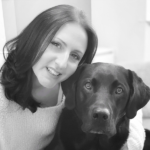
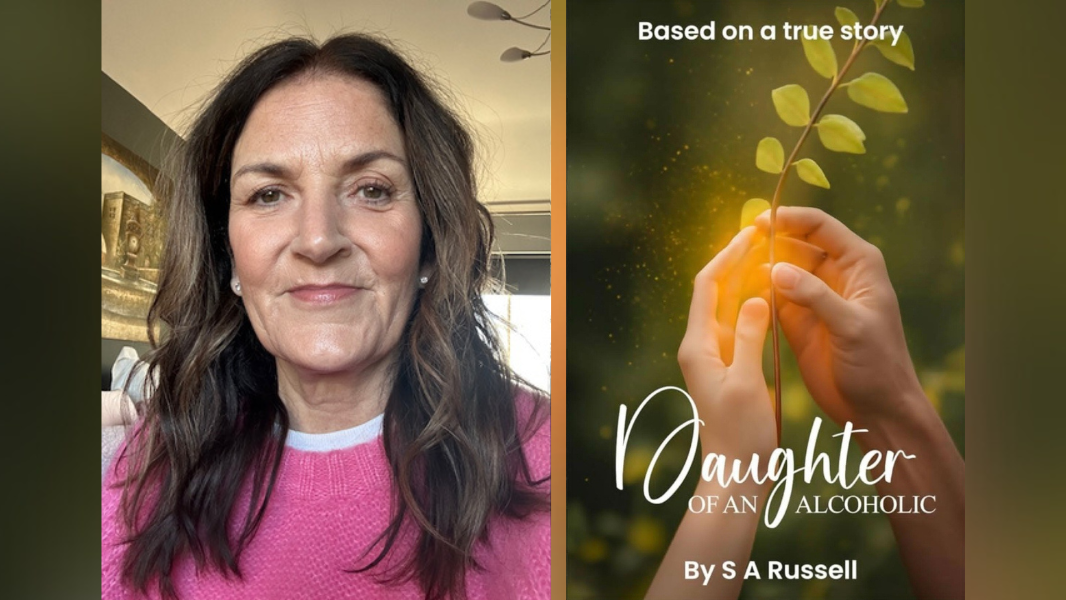
Sandra Russell is the author of Daughter of an Alcoholic, a powerful memoir about growing up under the shadow of addition and finding the strength to break free.
We sat down with her to talk about her experience of writing the book, revisiting painful memories, and what she hopes readers take away from her story.
Following the interview, you’ll find from Daughter of an Alcoholic.
What made you decide to write about your experience? Were there any hesitations about making such a personal story public?
I’ve always journalled. I was that teenage girl who wrote everything down. In 2020, I was diagnosed with breast cancer, and a friend suggested I get everything out of my head and onto the page. Because my husband couldn’t come to every appointment, I found myself missing writing, so I started journalling more.
Not just about the cancer, but about childhood events I could remember. Writing in the third person really helped. Everything felt very disorganised and jumbled in my head, and the process helped me make sense of it all.
It was never intended to become a book. It was an editor friend who said, “You’ve got to try and get this into a book.” When you have a lot in your head it can feel disjointed, but putting it into chronological order made it cohesive.
Was it cathartic? Absolutely. It felt like a weight had been lifted. It was like therapy, that sense of walking on air. And the feedback has been incredibly moving. People have shared really difficult experiences of their own, which gave me a lot of perspective on my own story.
My mother was very short and harsh and detached in many ways. I didn’t understand how difficult that was until I became a mother myself.
Only then did I realise how hard she must have worked, and how little time or emotional capacity she had to support us all. That’s compassion fatigue. She’d say things like, “If it wasn’t for me, you’d be in care,” not appreciating the impact those words had.
As for hesitations, I didn’t feel personally worried about sharing the story. I felt it could help someone younger going through something similar. I briefly considered a pen name, but then thought, what’s the point?
A couple of family members weren’t happy and shared their opinions. One sibling asked me not to include any photos of our dad. But once I started doing radio interviews, it didn’t make sense to be anonymous.
How did it feel to write about these memories — and did the process change how you see your own story?
It made me realise that, while my experience was real and painful, it wasn’t as bad as what some people have been through. The research I did also helped me understand my dad a bit more.
A lot of people have identified with different members of my family and my brother even cut down on his drinking after seeing so much of himself in my dad. One woman told me she connected deeply with the way I separated the addict from the father.
There came a point where I stopped contact with him, so I could be my own person and step out of the shadow of his drinking. Later, he asked if he could see my daughter. We had contact for around six months and he built a relationship with my daughters.
The only time he ever admitted to being an alcoholic was when he was sober. He’d reluctantly talk about it with me, but he never drove those conversations himself. The number of people who have come forward to say they are children of alcoholics has been extraordinary.
Growing up, were you able to talk about what was happening to anyone outside your home? What support, if any, did you receive?
It was never discussed at home, but my mum did go to Al-Anon because she loved my dad and she wanted it to work. She carried the Serenity Prayer with her for many years. I don’t think she saw his drinking as an illness; she saw it as a choice. For me, it was easier to process when I understood it as an illness.
In Irish families, alcohol is always present. It was always in our home. We’d go strawberry picking in the summer, but always for an hour around 11am and then we’d head to the pub. All our family activities revolved around pub opening hours. I was quite often left out in the car while my dad was inside, which is a form of abuse, though we didn’t see it that way at the time.
I never had any formal support, but because it was our normal, we didn’t recognise that we needed it. I grew very close to my friends’ parents. My best friend’s dad used to call me his eldest girl. They knew my dad drank, but I never went into detail. My siblings and I talked about it a little when we were older, but not when we were young.
We also need to be mindful that while alcoholism itself isn’t hereditary, addiction is. My own drinking in my twenties and thirties became a problem. I’d open a bottle at five o’clock and a second when my husband got home at seven. I recognised that wasn’t right, so I stopped drinking during the week. Now I don’t drink at all.
In what ways do you think your childhood shaped who you are today?
It made me resilient and strong. It’s enabled me to deal with most things. When I got my cancer diagnosis, I just got on with it. Trying to fix someone as a child does that to you; it makes you a strong individual as you grow.
But it also left its mark in other ways. I’ve had to confront my own issues. My relationship with alcohol, and panic attacks that I later understood, through therapy, were triggered by my daughters reaching the age I was when my dad’s drinking really nosedived. That was also when I stopped drinking altogether.
How do you feel your father’s drinking affected your relationships with your siblings?
When we were young, we were all very close, but we each developed a very different relationship with alcohol. My eldest brother became a heavy drinker; my second brother could barely tolerate it. For all of us, drinking was just normal.
As adults, we’ve drifted apart a little. We don’t stay in touch the way we used to. During my time working as a flight attendant, I wasn’t speaking to my dad at all, which was also when my own drinking was at its worst. I was in my mid-twenties. I’d cut ties with him because I needed the peace.
Once I started to get my drinking under control and began therapy, I needed to focus on that. When we did eventually make contact during one of his sober periods, it was good. But when he relapsed again, I could see the signs. We’d speak in the mornings, not the afternoons.
Who did you most have in mind when writing this — is there a particular reader you were hoping to reach?
Anyone who is living through this right now and needs to know they’re not alone. I’ve been surprised by how many people have seen themselves in the story. Not just children of alcoholics, but people who’ve identified with different members of my family. I genuinely didn’t expect that.
What would you say to a child or adult living with a family member’s drinking right now, who doesn’t know where to turn?
Talk to someone. A family member, a teacher, anyone you trust enough to offload to. Though I know a younger version of me wouldn’t have done that. So if you can’t, please contact Nacoa.
They have a free helpline and a website, and the person you speak to will, nine times out of ten, have lived experience themselves. They can really help. I didn’t know about Nacoa until I’d already started writing the book. I wish I had.
An extract from Daughter of an Alcoholic
Every summer, like clockwork, we would pack our lives into suitcases and head for the South Coast – Devon, to be precise. It was a ritual of sorts, one that felt both exhilarating and exhausting. The car would be loaded like a game of Tetris: foldable chairs, bags of towels, picnic boxes, the kettle (yes, always the kettle), and four children crammed into the back seat. My sister sometimes rode up front between my parents, legs tucked up, oblivious to seatbelt laws. I’d sit squashed in the middle of my two brothers, arms crossed tightly to avoid any “He touched me!” drama that would erupt five minutes into the journey.
“Right, everyone got a sweet?” my dad would call out as he turned the key in the ignition.
“Yeah,” we’d mumble in reply.
“Good. No fighting. No moaning. And don’t ask how long it’s going to take!”
We always asked.
The journey seemed to stretch on forever – hot vinyl seats sticking to the backs of our legs, windows barely cracked open, Mum sighing quietly while Dad hummed along to The Carpenters or The Beatles. His mood, in those early hours, was hopeful. He was always better in motion. There was something about the promise of a holiday – of sun, sea, and escape – that seemed to ease him temporarily, like maybe he could be the man we all wanted him to be. He cracked jokes, passed sweets to the back, tapped the steering wheel in rhythm to the music.
But it didn’t last. It never did.
The most direct expression of love
I remember one trip in particular. I was sucking on a hard-boiled sweet – one of those strawberry ones wrapped in the shiny red wrapper – when it slipped unexpectedly down my throat. I couldn’t breathe. Panic swelled like a balloon in my chest. My arms flailed, and I gasped – or tried to – clawing at my seatbelt. Everything blurred.
“Stop the car! She’s choking!” my brother yelled.
Without a word, my father yanked the car to a screeching halt right there in the middle of the roundabout. He leapt out, flung open the back door, and dragged me out with alarming strength. His arms locked around my small body and he gave me the Heimlich once, twice, until the sweet flew from my mouth and landed somewhere in the grass. I stood there, shaken, heart hammering in my ears.
“You alright, sweetheart?” he asked, voice low, hand on my back.
I nodded, tears pouring down my face. He crouched down and looked me in the eyes.
“Don’t you bloody scare me like that again.”
And then, for a second, he pulled me in. Hugged me tightly. I could smell the faintest trace of whisky from earlier that morning, but his hands were steady, and his voice was tender. I didn’t know what to make of it. My dad – the man who so often left us emotionally stranded – had just saved my life. It was the most real, most direct expression of love I’d ever received from him.
That moment stayed with me, like a splinter under the skin – unexpected, sharp, unforgettable.
It was magic
When we finally arrived at the beach house, it was always after dark. I remember how the silence would settle over the car as we wound through narrow coastal lanes, everyone half-asleep, headlights casting long shadows on the hedgerows. The crunch of tyres on gravel meant we were there. At last. Our temporary freedom.
The house was old, with wood-framed windows and creaky stairs. It smelled of salt, sand, and damp flip-flops. But to us, it was magic. Each summer we rented it with our extended family – my mum’s sister, her husband, and our two cousins. The grown-ups shared cooking duties, and the children were sent outside at every opportunity.
“Out you go,” Mum would say, waving a spatula. “Blow the cobwebs off. And don’t come back covered in sand!”
We never listened. Sand was everywhere – in our beds, in our sandwiches, in the pockets of our shorts. We ran barefoot through the dunes, raced each other along the shoreline, built lopsided sandcastles with moats that never held water. Our laughter echoed across the beach like seagulls in flight – light, high, untethered.
Mum always made the best of things. She set up folding chairs, laid out picnic rugs, kept sandwiches dry and tempers calm. She carried the weight of Dad’s moods on her back like a rucksack – never putting it down, even on holiday.
‘You are a stranger half the time’
One morning, I overheard them arguing outside the house. Dad had been drinking the night before – too much, even for him. His voice was slurred, full of anger.
“You treat me like a bloody stranger!” he shouted.
“You are a stranger half the time,” she snapped back. “You drink yourself senseless and leave me to sort the mess. I’m tired, Tony. Tired of pretending this is normal.”
That argument sat in the air like sea mist – thick and lingering. But that evening, they were back to smiling for the family BBQ. That was the rhythm: rupture, pretend, repeat. The holidays didn’t pause the dysfunction – they just gave it a new backdrop.
But still… there were moments.
Evenings where we’d all gather on the beach around a bonfire. Grandad would light it with his old matches and tell us to “stand back, or you’ll singe your eyebrows off.” We’d toast marshmallows, sing songs off-key, and listen to stories about Ireland – about their childhoods, about things we couldn’t picture but loved to hear.
“You lot don’t know you’re born,” Dad would joke, poking the fire. “We had turf fires and no shoes and only one toilet for six kids and four adults.”
“Stop exaggerating,” Mum would mutter, but she’d be smiling.
A proper family
And for those few hours, we felt like a proper family. The firelight flickered over our faces. Someone passed round warm mugs of tea. The wind blew, but the flames held steady.
Looking back, those holidays were a tangle of contradiction – sunlight and storm clouds. There was beauty in them, yes, but also tension. Joy interrupted by drunken silences. Togetherness fractured by Dad’s unpredictability.
But they mattered. They taught me to see the good when it came, to cling to those bright moments with everything I had. They taught me that family isn’t always peaceful – but sometimes, it’s all the more precious for being hard-earned.