Meet the author: Annette Allen

We sat down with Annette Allen to find out what she hopes readers take from her book We Are Enigmas.

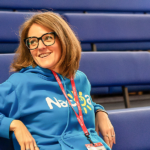
Nacoa member Annette is the author of We Are Enigmas, a memoir about growing up with an anxious father, a much-loved brother’s addiction, and a childhood spent moving between countries.

We sat down with her to talk about the book, revisiting difficult memories, and what she hopes readers take from her story.

What led you to write We Are Enigmas, and why now?

Back in 2006 I wrote and self-published my first book, An Ethiopian Odyssey, about tracking down ]old classmates from my school in Addis Ababa.

Even while I was writing that one, I knew in the back of my mind that I wanted to write about my younger brother, Eric. But Eric was still alive then, and I thought: no, he’s been through enough. I wasn’t going to do that to him.

There were really four things that led me to write this book. The first was growing up in a household with a very anxious father. My dad was a talented aeronautical engineer who worked on the de Havilland Comet, the world’s first jet airliner, but because he was so anxious. we were always walking on eggshells at home.

I became aware of that from about the age of four. When I saw him scapegoating Eric, I decided to become Eric’s guardian, and I stayed that way for the rest of our lives.

The second was meeting Nacoa. I came to one of your volunteer meetings in Bristol in 2016 and met Hilary and lots of other people profoundly affected by their parents’ drinking – some with terrible physical or mental abuse, some just with the sadness of never really knowing their parents. I felt a kinship with them, because in a way I never really knew my dad either.

The third is something very few people in the UK understand: the term “third culture kid.”

We moved constantly with my dad’s job. Around the UK from when I was seven, then to Ethiopia in the early sixties, back to the UK for a couple of months each in Watford and Coventry, and then to apartheid-era South Africa, which was about as far from our liberal, cosmopolitan life among sophisticated Ethiopians as you could get.

The book goes into detail about what it was like to be a white person who felt real solidarity with Black South Africans because of the years we’d spent in Ethiopia.

And the fourth thing – this is something of an exclusive – is that I had a sudden stroke in August 2023 that very nearly killed me. It was the same kind of stroke my father had at 62, his third, which did kill him.

Thanks to a wonderful neurosurgeon and my husband’s care, I survived, though I had to learn to walk again. I’m honestly a better person now than I was before it happened, because I’ve learned to be grateful for every single day.
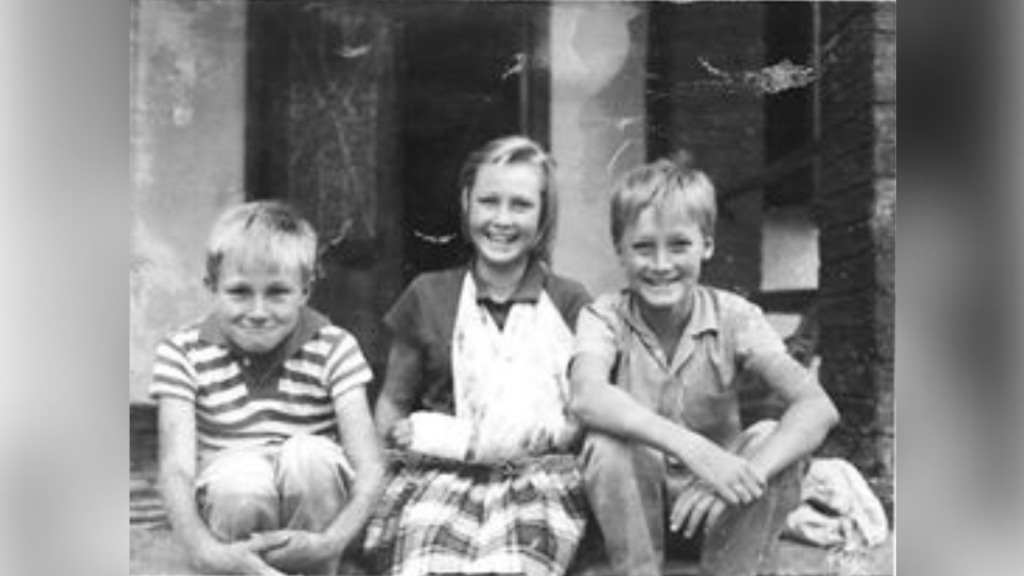
Annette, Eric and Roy in Addis Ababa

At the heart of the story, what is We Are Enigmas really about, for you?

It’s about living and growing up through the chaos caused by a very anxious father, and my younger brother’s growing addiction. Eric started smoking marijuana not long after we arrived in South Africa – he was just eleven – and he became depressed there too, because he was such a compassionate person.

I should say Eric was also gay, though to me that’s simply irrelevant: love is love, we are who we are, we’re born that way.

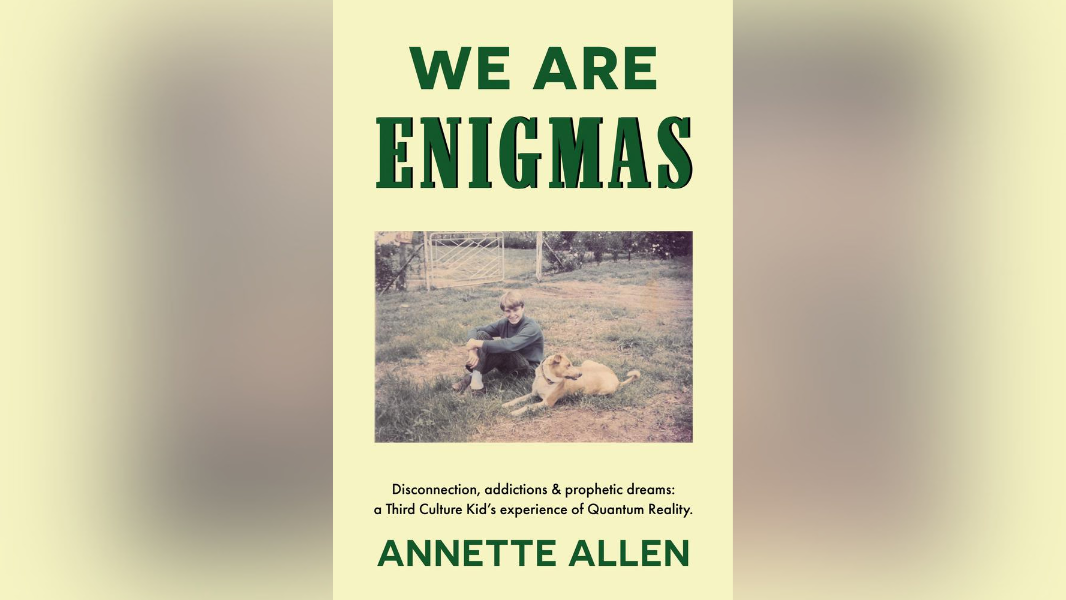
My twin brother Roy and I covered for him and we didn’t tell our parents when he skipped school. The photograph on the cover of the book is of Eric at fifteen, sitting with our dog, Wusha (Amharic for “dog” – she was a little rescue we brought back from Ethiopia). He looks so innocent in it. That’s exactly why I chose that image.

What was your childhood like, and how did it shape who you became?

I had to grow up quickly. I was aware of that from the age of six. The first, most profound feeling was a deep loneliness, a sense of being disconnected.

School felt safe; I loved learning and I read early, immersing myself in stories and myths to escape my parents’ constant arguing. My dad never told us when or why we were moving. We simply went.

We had two older half-sisters, Jackie and Gill, from his first marriage (his first wife died of TB after the war, aged just 26), but they were mostly away at boarding school, only home for the holidays.

Was there anything – or anyone – that felt like a safe harbour when things were hard at home?

Two things: My mother had help at home, Mrs. Shoveller, and Jackie and Gill, our sisters. They would take us out for the day – my dad would give them money for the bus and lunch and we’d never come to any harm with them. There’s a lovely photo of the five of us from that time.

The other safe space was my grandparents’ home in Kristiansand, Norway. My mother was very conscious that the way we were being raised gave us little connection to either side of the family, so she made sure we spent time in Norway between postings. It felt like home in a way nowhere else quite did.
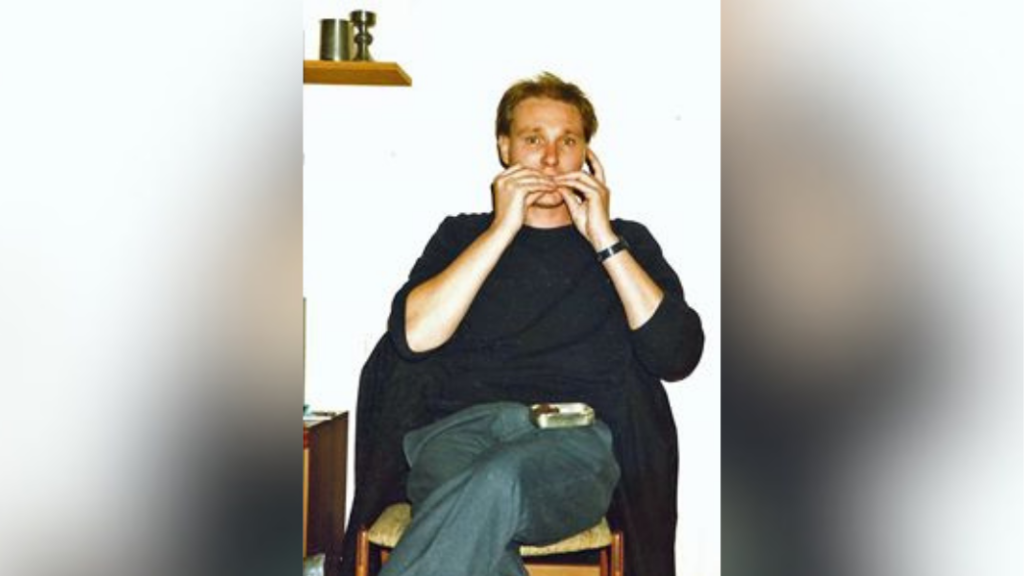
Eric at 30, at home in Hertfordshire

How did growing up around addiction affect you, and how do you understand it now, looking back?

I think of addiction as a stealthy leopard – gradually, gradually stalking someone, and you never know exactly when it’s fully taken hold. Not even the person disappearing into it knows. Eric would go out to see a friend and come back with his eyes like pinpricks, and he’d snap at our mum when she asked where he’d been.

He became a different person, and it wasn’t frightening to witness; I felt more of an enormous sadness — because underneath it he was still this bright, lovely boy.

The book goes into some of the harder things that happened during those years, but also the good. There was an incident in South Africa when a snake got into the brickwork by our front door.

Neither Roy nor I were brave enough to go out, but Eric was the one who helped our mum deal with it. People remember the difficult side of addiction, but it doesn’t define the person. That’s exactly why I wanted to write the book the way I did.

I think of addiction as a stealthy leopard – gradually, gradually stalking someone, and you never know exactly when it’s fully taken hold.

What do you wish someone had told you, as a child, in that situation?

To recognise that I’d have to grow up quickly, and to recognise the role I’d fallen into. I was always the one rooting for Eric.

When he ran away from home, my parents were distraught, and my mother would say, “of course you always sat on the fence”, because I could see the reasons why he’d run, and I could take his side. That used to upset them.

I never talked to classmates about what was going on at home – that’s how I chose to cope, I suppose. Sometimes I felt enormous shame, other times anger, even though there was nothing I could have done.

My twin, Roy, escaped a lot of it. He was in a band after school and weekends. I was usually the one left at home.

One New Year’s Eve, I was all dressed up and about to go out, when my mother came into my bedroom to say Eric had disappeared again and I’d have to help find him.

I cancelled my night out and stayed to help. That made me livid! Nobody ever asked how I felt about any of it. I was the firstborn, born twelve minutes before Roy, and a girl. I was just expected to be steady and brave.

If someone growing up with a parent’s or sibling’s addiction reads your story, what would you want them to take from it?

Stay true to who you are. Find stillness each day where you can just be you, and know that nothing you’ve done has caused this. Staying calm in that storm doesn’t just help you.

It helps the addict and the wider family, too. Rather than criticising and judging, don’t. There’s a saying of Jesus’s I love: “remove the plank from your own eye before you go looking for the splinter in someone else’s”. (Matthew 7: 4-5). None of us is perfect.

Looking back, I’m proud of how I got through it all – my father’s anxiety and constant criticism, my mother’s nerves (she had a breakdown when Eric ran away from home).

I told myself I’d be okay, once I got away from that toxic atmosphere, and I focused hard on my education. I was the only one of the three of us who matriculated in South Africa. Roy failed his exams, and Eric left school early with almost no qualifications because of his addiction.

I made the decision not to go to university there; I wanted to get back to the UK, where I felt safe.

What helped you most in the years when things were at their worst?

My faith, above everything. My mum sent us to Sunday school from the age of five, and I learned about an incredibly compassionate man called Jesus who loved children.

I put my faith in him from the age of six, and it’s never left me. It’s carried me through some very difficult situations since, including things I went through as a woman at work.

I’ve learned to let things go rather than seek revenge. I’ve watched people who wronged me face their own consequences, and I just think: well, there you go.

For almost ten years I also supported people trying to quit drinking, through online communities including one called Club Soda, founded by Laura Willoughby I gave that up eventually. And I had my own relationship with alcohol to reckon with, if I’m honest.

I quit drinking for good on the 1st of May 2015. The same date, as it happens, as the photograph on the book cover (taken 1st of May 1970) and his funeral (1st of May 2009).

I also found, and still find, real meaning in small acts for people who are homeless. I always saw Eric in them, since he went through periods of homelessness himself. I’d buy people food or a hot drink, wherever in the world I happened to be. Milton Keynes station, or a trip to Chartres with a school friend; Krakow and Addis Ababa for instance. I never saw someone as “other.” I saw a brother, a sister. Who am I to judge?
Was there anything you found particularly hard to write?

Going back to who Eric was as a child, and then writing about what came later. It made me profoundly sad. He was genuinely talented, a very good draughtsman; he could have been an artist.

I remember buying him beautiful drawing paper and pencils for one of his birthdays, telling him to nurture that talent. When we cleared his flat after he died, that same paper was still there in the corner of the room, unused.

I didn’t end up reading from the book itself in our conversation, but I read part of the eulogy I wrote for Eric, which says a lot of what I’d want people to know about him. Tha,t despite everything, he stuck by his friends, visited them in hospital, cooked for our mother, cared for animals, played the harmonica, and had a sharp sense of humour and a real interest in the world.

He was a lifelong Marxist, which is why everyone wore red to his funeral, and why it fell, fittingly, on the 1st of May.

What do you hope readers take away from We Are Enigmas?

Two things. First, I want people to understand who we are as third culture kids – a real global community, even if the term isn’t widely known here. Barack Obama is probably the most famous example: a Kenyan father, an American mother, raised partly in Hawaii.

People like us sit in the middle and can see both sides, which is why I think third culture kids often make good diplomats and peacemakers. I’m a lifelong pacifist myself.

Second: hope. There is always hope. Connection matters enormously. It’s what drew me to Nacoa in the first place, and what’s kept me involved with you for years, at events and meetings at the House of Commons among others.

More than anything, I want readers to know: I survived. There is sadness in this story, but there is hope in it too. It has profoundly shaped who I am.

An extract from We Are Enigmas

The Letter: Bonaero Park, July 1970

‘Gay! Gay!’ Dad’s angry voice interrupted my reading. ‘Come here now!’

I’d been lying on the bed, feet propped against the wall, history book on my belly, trying to memorise dates and maps for the History mock-Matriculation exam the following week. The final exams were in November, and I desperately wanted to pass my Matric to get out of this hellhole. Work, save, and then va-va voom out of here!

Sighing, I got up. What now? Roy was lucky, he didn’t have exams. He’d flunked his standard nine tests, so had to repeat the year. His time and energy were taken up with the band for whom he was the lead vocalist – anything to get away from Eric and the morose atmosphere at home.

‘Yes, Dad, what’s the problem?’ He stood in the dining room, two high spots of red – beetroot red – on his cheeks. He gave me a filthy look, before flinging an unopened letter towards me. I missed it, and it fluttered to the floor in protest.

‘Here, this is for you, from your lovely brother! He couldn’t even be bothered to write to Mum after all the pain he’s caused her. Little shit!’

“Oh,” I said, half in relief, half in fear. I hated it when Dad got into such states. Shakily, I picked it up. Glancing at the Cape Town postmark, I tried not to look impressed. Wow, he’d made it that far – 1,200 kms from home. Good on him! My trembling hands slipped a forefinger through the gap between the crease and the gum. It eased and then ripped across. Dad’s breathing was heavy, but I ignored his angry glare, taking my time to read it.

‘Dear Annette,

Sorry I’ve not written before. I had to get away – life was becoming a nightmare, what with Mum discovering I’d been bunking off school and Dad giving me grief about it. I needed some space to think about things.

I was lucky to get down to Cape Town – a long hitch! I only had R20 when I got here, but Linda, a very kind woman, rescued me. She works in the city and I’m staying in her flat near Table View. Fantastic views of Table Mountain! She knows where to get speed, so we have a groovy time when she gets home from work. She’s teaching me how to cook and most days I take a long walk on the beach, just trying to get my head together. She’s got loads of good albums – Hendrix, Fat Mattress, the Byrds. Even Frank Zappa! So, I’m happy for the time being.

Tell Mum that I love her and I hope she’s not too worried about me. I’m a survivor, seeing a beautiful part of this fucked-up country. I know Dad will be freaking out – let him know I’m giving him some space too. I hate the arguments and I know I’m a big disappointment to him.

Ah well, you can’t please all of the people all of the time.

Don’t know when I’ll be back. Thanks for being on my side. I know you’ll understand……

Love you

Eric.’

“Well, what did he say?” Out of the corner of my eye, I noticed his raised voice had alerted Mum, and she’d got out of the sunlounger, where she’d been tanning on the patio.

“Dad, don’t get too upset. He’s alive, thank God! Don’t upset yourself – remember your stroke last year?”

As Eric’s addiction had spiralled, so had Dad’s anger. He’d ended up with very high blood pressure and then had a stroke at just forty-eight and was in hospital for a week. We must not have a repeat of that! I begged, silently.

My prayers to Christ had ceased: hope was microscopic and when the Dutch Reformed Church – the state’s national religion – supported separation, cruelty, the death penalty and homophobia, God had a very sick sense of humour in South Africa. Was God white? No. Was God she? Or was that energy something cosmic, like waves from a rainbow, penetrating every cell and, sometimes, shattering the hardest of hearts? I no longer knew.

Worse still, I no longer cared.

My heart was hardening, and I often felt myself teetering on the edge of a breakdown. But I had my escape plans and nothing, but nothing, would prevent them happening. Practical plans.

“What’s going on? Did I hear Eric’s name?” Mum stepped inside, tipping her sunglasses up on her forehead. Her skin was darkening and zigzag lines feathered her eyes. She put her cigarettes and ashtray on the table.

Wusha followed her in, white tipped tail wagging. Could it soon be lunchtime, her nose sniffed? She padded over to the dog bowl in the kitchen, licking the sides as a reminder. Wusha’s belly was getting rounder, now the pups were weaned. She looked up at Mum, panting in anticipation.

“Mum, here, it’s from Eric,” I said, pushing the letter into her hands.

This is an extract from We Are Enigmas, which is available to buy at Troubador Publishing.

Leave a Reply

Meet the author: Annette Allen

We sat down with Annette Allen to find out what she hopes readers take from her book We...

Meet the author: Annette Allen

We sat down with Annette Allen to find out what she hopes readers take from her book We...

  • About Nacoa

    We sat down with Annette Allen to find out what she hopes readers take from her book We Are Enigmas.

  • About Nacoa

    We sat down with Annette Allen to find out what she hopes readers take from her book We Are Enigmas.

  • Hello!

    We sat down with Annette Allen to find out what she hopes readers take from her book We Are Enigmas.

  • Nacoa branding - style guide

    We sat down with Annette Allen to find out what she hopes readers take from her book We Are Enigmas.

  • Contact us Person looking at Nacoa's website for people affected by a parent's drinking to show different ways to contact for support or to get involved with the charity to help other children of alcoholics

    We sat down with Annette Allen to find out what she hopes readers take from her book We Are Enigmas.

  • Governance

    We sat down with Annette Allen to find out what she hopes readers take from her book We Are Enigmas.

  • History

    We sat down with Annette Allen to find out what she hopes readers take from her book We Are Enigmas.

  • Nacoa Helpline

    We sat down with Annette Allen to find out what she hopes readers take from her book We Are Enigmas.

  • Calling the helpline

    We sat down with Annette Allen to find out what she hopes readers take from her book We Are Enigmas.

  • Helpline FAQs

    We sat down with Annette Allen to find out what she hopes readers take from her book We Are Enigmas.

  • Managing browser history

    We sat down with Annette Allen to find out what she hopes readers take from her book We Are Enigmas.

  • Monitoring & evaluation

    We sat down with Annette Allen to find out what she hopes readers take from her book We Are Enigmas.

  • Policies & procedures

    We sat down with Annette Allen to find out what she hopes readers take from her book We Are Enigmas.

  • Our people

    We sat down with Annette Allen to find out what she hopes readers take from her book We Are Enigmas.

  • Abie Dunlop

    We sat down with Annette Allen to find out what she hopes readers take from her book We Are Enigmas.

  • Amanda Brett

    We sat down with Annette Allen to find out what she hopes readers take from her book We Are Enigmas.

  • Amy Dickson

    We sat down with Annette Allen to find out what she hopes readers take from her book We Are Enigmas.

  • Carolyn Jones

    We sat down with Annette Allen to find out what she hopes readers take from her book We Are Enigmas.

  • Cassandra Ohlson Cassandra Ohlson presenting at Nacoa's Stafford Ward Memorial Lecture 2019

    We sat down with Annette Allen to find out what she hopes readers take from her book We Are Enigmas.

  • Ceri Walker

    We sat down with Annette Allen to find out what she hopes readers take from her book We Are Enigmas.

  • Dr Piers Henriques

    We sat down with Annette Allen to find out what she hopes readers take from her book We Are Enigmas.

  • Euan Graham Euan Graham

    We sat down with Annette Allen to find out what she hopes readers take from her book We Are Enigmas.

  • Hilary Henriques MBE

    We sat down with Annette Allen to find out what she hopes readers take from her book We Are Enigmas.

  • Jamie Brett

    We sat down with Annette Allen to find out what she hopes readers take from her book We Are Enigmas.

  • Jane Elson

    We sat down with Annette Allen to find out what she hopes readers take from her book We Are Enigmas.

  • Josh Connolly

    We sat down with Annette Allen to find out what she hopes readers take from her book We Are Enigmas.

  • Katy Stafford

    We sat down with Annette Allen to find out what she hopes readers take from her book We Are Enigmas.

  • Laurence McAllister Alleyne

    We sat down with Annette Allen to find out what she hopes readers take from her book We Are Enigmas.

  • Liam Tullberg Liam Tullberg Nacoa

    We sat down with Annette Allen to find out what she hopes readers take from her book We Are Enigmas.

  • Lindsay Sykes

    We sat down with Annette Allen to find out what she hopes readers take from her book We Are Enigmas.

  • Maya Parker MA

    We sat down with Annette Allen to find out what she hopes readers take from her book We Are Enigmas.

  • Peter Irwin

    We sat down with Annette Allen to find out what she hopes readers take from her book We Are Enigmas.

  • Tod Harrison

    We sat down with Annette Allen to find out what she hopes readers take from her book We Are Enigmas.

  • Patrons & ambassadors

    We sat down with Annette Allen to find out what she hopes readers take from her book We Are Enigmas.

  • The Nacoa Promise

    We sat down with Annette Allen to find out what she hopes readers take from her book We Are Enigmas.

  • Experiences Search Result

    We sat down with Annette Allen to find out what she hopes readers take from her book We Are Enigmas.

  • Get involved

    We sat down with Annette Allen to find out what she hopes readers take from her book We Are Enigmas.

  • Donate or become a member

    We sat down with Annette Allen to find out what she hopes readers take from her book We Are Enigmas.

  • About Gift Aid

    We sat down with Annette Allen to find out what she hopes readers take from her book We Are Enigmas.

  • Become a corporate member

    We sat down with Annette Allen to find out what she hopes readers take from her book We Are Enigmas.

  • Become a member

    We sat down with Annette Allen to find out what she hopes readers take from her book We Are Enigmas.

  • Welcome new member

    We sat down with Annette Allen to find out what she hopes readers take from her book We Are Enigmas.

  • Donate in memory

    We sat down with Annette Allen to find out what she hopes readers take from her book We Are Enigmas.

  • Gift in your will

    We sat down with Annette Allen to find out what she hopes readers take from her book We Are Enigmas.

  • Give in celebration

    We sat down with Annette Allen to find out what she hopes readers take from her book We Are Enigmas.

  • Make a donation

    We sat down with Annette Allen to find out what she hopes readers take from her book We Are Enigmas.

  • Thank you!

    We sat down with Annette Allen to find out what she hopes readers take from her book We Are Enigmas.

  • More ways to give

    We sat down with Annette Allen to find out what she hopes readers take from her book We Are Enigmas.

  • Fundraising

    We sat down with Annette Allen to find out what she hopes readers take from her book We Are Enigmas.

  • Thank you for signing up to Big Nacoa Walk 2024! Big Nacoa Walk thumbnail

    We sat down with Annette Allen to find out what she hopes readers take from her book We Are Enigmas.

  • Raise awareness

    We sat down with Annette Allen to find out what she hopes readers take from her book We Are Enigmas.

  • Sponsored events

    We sat down with Annette Allen to find out what she hopes readers take from her book We Are Enigmas.

  • Volunteering

    We sat down with Annette Allen to find out what she hopes readers take from her book We Are Enigmas.

  • Nacoa Volunteer Application Form

    We sat down with Annette Allen to find out what she hopes readers take from her book We Are Enigmas.

  • Message boards

    We sat down with Annette Allen to find out what she hopes readers take from her book We Are Enigmas.

  • Log In

    We sat down with Annette Allen to find out what she hopes readers take from her book We Are Enigmas.

  • Message board rules of conduct

    We sat down with Annette Allen to find out what she hopes readers take from her book We Are Enigmas.

  • Start a new topic

    We sat down with Annette Allen to find out what she hopes readers take from her book We Are Enigmas.

  • Nacoa Teacher Training Feedback Form

    We sat down with Annette Allen to find out what she hopes readers take from her book We Are Enigmas.

  • Nacoa: Helping everyone affected by their parent's drinking Nacoa UK Helping everyone affected by their parent's drinking

    We sat down with Annette Allen to find out what she hopes readers take from her book We Are Enigmas.

  • News & events

    We sat down with Annette Allen to find out what she hopes readers take from her book We Are Enigmas.

  • Events

    We sat down with Annette Allen to find out what she hopes readers take from her book We Are Enigmas.

  • Features

    We sat down with Annette Allen to find out what she hopes readers take from her book We Are Enigmas.

  • Latest

    We sat down with Annette Allen to find out what she hopes readers take from her book We Are Enigmas.

  • News

    We sat down with Annette Allen to find out what she hopes readers take from her book We Are Enigmas.

  • Privacy and cookies policy

    We sat down with Annette Allen to find out what she hopes readers take from her book We Are Enigmas.

  • Research & resources

    We sat down with Annette Allen to find out what she hopes readers take from her book We Are Enigmas.

  • Books, videos and media

    We sat down with Annette Allen to find out what she hopes readers take from her book We Are Enigmas.

  • Nacoa professionals training

    We sat down with Annette Allen to find out what she hopes readers take from her book We Are Enigmas.

  • Nacoa publications

    We sat down with Annette Allen to find out what she hopes readers take from her book We Are Enigmas.

  • Nacoa Schools Outreach Programme

    We sat down with Annette Allen to find out what she hopes readers take from her book We Are Enigmas.

  • Nacoa: School Nomination Form

    We sat down with Annette Allen to find out what she hopes readers take from her book We Are Enigmas.

  • Research

    We sat down with Annette Allen to find out what she hopes readers take from her book We Are Enigmas.

  • Widening Access

    We sat down with Annette Allen to find out what she hopes readers take from her book We Are Enigmas.

  • Some Punjabi and Sikh parents drink too much…

    We sat down with Annette Allen to find out what she hopes readers take from her book We Are Enigmas.

  • Support & advice

    We sat down with Annette Allen to find out what she hopes readers take from her book We Are Enigmas.

  • Adults

    We sat down with Annette Allen to find out what she hopes readers take from her book We Are Enigmas.

  • Books, videos and media

    We sat down with Annette Allen to find out what she hopes readers take from her book We Are Enigmas.

  • FAQs

    We sat down with Annette Allen to find out what she hopes readers take from her book We Are Enigmas.

  • Help and advice

    We sat down with Annette Allen to find out what she hopes readers take from her book We Are Enigmas.

  • Information

    We sat down with Annette Allen to find out what she hopes readers take from her book We Are Enigmas.

  • Personal experiences

    We sat down with Annette Allen to find out what she hopes readers take from her book We Are Enigmas.

  • Children

    We sat down with Annette Allen to find out what she hopes readers take from her book We Are Enigmas.

  • Books, videos and media

    We sat down with Annette Allen to find out what she hopes readers take from her book We Are Enigmas.

  • FAQs

    We sat down with Annette Allen to find out what she hopes readers take from her book We Are Enigmas.

  • Help and advice

    We sat down with Annette Allen to find out what she hopes readers take from her book We Are Enigmas.

  • Information

    We sat down with Annette Allen to find out what she hopes readers take from her book We Are Enigmas.

  • Personal experiences

    We sat down with Annette Allen to find out what she hopes readers take from her book We Are Enigmas.

  • Concerned others & professionals

    We sat down with Annette Allen to find out what she hopes readers take from her book We Are Enigmas.

  • Books, videos and media

    We sat down with Annette Allen to find out what she hopes readers take from her book We Are Enigmas.

  • FAQs

    We sat down with Annette Allen to find out what she hopes readers take from her book We Are Enigmas.

  • Help and advice

    We sat down with Annette Allen to find out what she hopes readers take from her book We Are Enigmas.

  • Information

    We sat down with Annette Allen to find out what she hopes readers take from her book We Are Enigmas.

  • Personal experiences

    We sat down with Annette Allen to find out what she hopes readers take from her book We Are Enigmas.

  • Young people

    We sat down with Annette Allen to find out what she hopes readers take from her book We Are Enigmas.

  • Books, videos and media

    We sat down with Annette Allen to find out what she hopes readers take from her book We Are Enigmas.

  • FAQs

    We sat down with Annette Allen to find out what she hopes readers take from her book We Are Enigmas.

  • Help and advice

    We sat down with Annette Allen to find out what she hopes readers take from her book We Are Enigmas.

  • Information

    We sat down with Annette Allen to find out what she hopes readers take from her book We Are Enigmas.

  • Personal experiences

    We sat down with Annette Allen to find out what she hopes readers take from her book We Are Enigmas.

  • Topics

    We sat down with Annette Allen to find out what she hopes readers take from her book We Are Enigmas.

Nacoa member Annette is the author of We Are Enigmas, a memoir about growing up with an anxious father, a much-loved brother’s addiction, and a childhood spent moving between countries.

We sat down with her to talk about the book, revisiting difficult memories, and what she hopes readers take from her story.

What led you to write We Are Enigmas, and why now?

Back in 2006 I wrote and self-published my first book, An Ethiopian Odyssey, about tracking down ]old classmates from my school in Addis Ababa.

Even while I was writing that one, I knew in the back of my mind that I wanted to write about my younger brother, Eric. But Eric was still alive then, and I thought: no, he’s been through enough. I wasn’t going to do that to him.

There were really four things that led me to write this book. The first was growing up in a household with a very anxious father. My dad was a talented aeronautical engineer who worked on the de Havilland Comet, the world’s first jet airliner, but because he was so anxious. we were always walking on eggshells at home.

I became aware of that from about the age of four. When I saw him scapegoating Eric, I decided to become Eric’s guardian, and I stayed that way for the rest of our lives.

The second was meeting Nacoa. I came to one of your volunteer meetings in Bristol in 2016 and met Hilary and lots of other people profoundly affected by their parents’ drinking – some with terrible physical or mental abuse, some just with the sadness of never really knowing their parents. I felt a kinship with them, because in a way I never really knew my dad either.

The third is something very few people in the UK understand: the term “third culture kid.”

We moved constantly with my dad’s job. Around the UK from when I was seven, then to Ethiopia in the early sixties, back to the UK for a couple of months each in Watford and Coventry, and then to apartheid-era South Africa, which was about as far from our liberal, cosmopolitan life among sophisticated Ethiopians as you could get.

The book goes into detail about what it was like to be a white person who felt real solidarity with Black South Africans because of the years we’d spent in Ethiopia.

And the fourth thing – this is something of an exclusive – is that I had a sudden stroke in August 2023 that very nearly killed me. It was the same kind of stroke my father had at 62, his third, which did kill him.

Thanks to a wonderful neurosurgeon and my husband’s care, I survived, though I had to learn to walk again. I’m honestly a better person now than I was before it happened, because I’ve learned to be grateful for every single day.

Annette, Eric and Roy in Addis Ababa

At the heart of the story, what is We Are Enigmas really about, for you?

It’s about living and growing up through the chaos caused by a very anxious father, and my younger brother’s growing addiction. Eric started smoking marijuana not long after we arrived in South Africa – he was just eleven – and he became depressed there too, because he was such a compassionate person.

I should say Eric was also gay, though to me that’s simply irrelevant: love is love, we are who we are, we’re born that way.

My twin brother Roy and I covered for him and we didn’t tell our parents when he skipped school. The photograph on the cover of the book is of Eric at fifteen, sitting with our dog, Wusha (Amharic for “dog” – she was a little rescue we brought back from Ethiopia). He looks so innocent in it. That’s exactly why I chose that image.

What was your childhood like, and how did it shape who you became?

I had to grow up quickly. I was aware of that from the age of six. The first, most profound feeling was a deep loneliness, a sense of being disconnected.

School felt safe; I loved learning and I read early, immersing myself in stories and myths to escape my parents’ constant arguing. My dad never told us when or why we were moving. We simply went.

We had two older half-sisters, Jackie and Gill, from his first marriage (his first wife died of TB after the war, aged just 26), but they were mostly away at boarding school, only home for the holidays.

Was there anything – or anyone – that felt like a safe harbour when things were hard at home?

Two things: My mother had help at home, Mrs. Shoveller, and Jackie and Gill, our sisters. They would take us out for the day – my dad would give them money for the bus and lunch and we’d never come to any harm with them. There’s a lovely photo of the five of us from that time.

The other safe space was my grandparents’ home in Kristiansand, Norway. My mother was very conscious that the way we were being raised gave us little connection to either side of the family, so she made sure we spent time in Norway between postings. It felt like home in a way nowhere else quite did.

Eric at 30, at home in Hertfordshire

How did growing up around addiction affect you, and how do you understand it now, looking back?

I think of addiction as a stealthy leopard – gradually, gradually stalking someone, and you never know exactly when it’s fully taken hold. Not even the person disappearing into it knows. Eric would go out to see a friend and come back with his eyes like pinpricks, and he’d snap at our mum when she asked where he’d been.

He became a different person, and it wasn’t frightening to witness; I felt more of an enormous sadness — because underneath it he was still this bright, lovely boy.

The book goes into some of the harder things that happened during those years, but also the good. There was an incident in South Africa when a snake got into the brickwork by our front door.

Neither Roy nor I were brave enough to go out, but Eric was the one who helped our mum deal with it. People remember the difficult side of addiction, but it doesn’t define the person. That’s exactly why I wanted to write the book the way I did.

I think of addiction as a stealthy leopard – gradually, gradually stalking someone, and you never know exactly when it’s fully taken hold.

What do you wish someone had told you, as a child, in that situation?

To recognise that I’d have to grow up quickly, and to recognise the role I’d fallen into. I was always the one rooting for Eric.

When he ran away from home, my parents were distraught, and my mother would say, “of course you always sat on the fence”, because I could see the reasons why he’d run, and I could take his side. That used to upset them.

I never talked to classmates about what was going on at home – that’s how I chose to cope, I suppose. Sometimes I felt enormous shame, other times anger, even though there was nothing I could have done.

My twin, Roy, escaped a lot of it. He was in a band after school and weekends. I was usually the one left at home.

One New Year’s Eve, I was all dressed up and about to go out, when my mother came into my bedroom to say Eric had disappeared again and I’d have to help find him.

I cancelled my night out and stayed to help. That made me livid! Nobody ever asked how I felt about any of it. I was the firstborn, born twelve minutes before Roy, and a girl. I was just expected to be steady and brave.

If someone growing up with a parent’s or sibling’s addiction reads your story, what would you want them to take from it?

Stay true to who you are. Find stillness each day where you can just be you, and know that nothing you’ve done has caused this. Staying calm in that storm doesn’t just help you.

It helps the addict and the wider family, too. Rather than criticising and judging, don’t. There’s a saying of Jesus’s I love: “remove the plank from your own eye before you go looking for the splinter in someone else’s”. (Matthew 7: 4-5). None of us is perfect.

Looking back, I’m proud of how I got through it all – my father’s anxiety and constant criticism, my mother’s nerves (she had a breakdown when Eric ran away from home).

I told myself I’d be okay, once I got away from that toxic atmosphere, and I focused hard on my education. I was the only one of the three of us who matriculated in South Africa. Roy failed his exams, and Eric left school early with almost no qualifications because of his addiction.

I made the decision not to go to university there; I wanted to get back to the UK, where I felt safe.

What helped you most in the years when things were at their worst?

My faith, above everything. My mum sent us to Sunday school from the age of five, and I learned about an incredibly compassionate man called Jesus who loved children.

I put my faith in him from the age of six, and it’s never left me. It’s carried me through some very difficult situations since, including things I went through as a woman at work.

I’ve learned to let things go rather than seek revenge. I’ve watched people who wronged me face their own consequences, and I just think: well, there you go.

For almost ten years I also supported people trying to quit drinking, through online communities including one called Club Soda, founded by Laura Willoughby I gave that up eventually. And I had my own relationship with alcohol to reckon with, if I’m honest.

I quit drinking for good on the 1st of May 2015. The same date, as it happens, as the photograph on the book cover (taken 1st of May 1970) and his funeral (1st of May 2009).

I also found, and still find, real meaning in small acts for people who are homeless. I always saw Eric in them, since he went through periods of homelessness himself. I’d buy people food or a hot drink, wherever in the world I happened to be. Milton Keynes station, or a trip to Chartres with a school friend; Krakow and Addis Ababa for instance. I never saw someone as “other.” I saw a brother, a sister. Who am I to judge?

Was there anything you found particularly hard to write?

Going back to who Eric was as a child, and then writing about what came later. It made me profoundly sad. He was genuinely talented, a very good draughtsman; he could have been an artist.

I remember buying him beautiful drawing paper and pencils for one of his birthdays, telling him to nurture that talent. When we cleared his flat after he died, that same paper was still there in the corner of the room, unused.

I didn’t end up reading from the book itself in our conversation, but I read part of the eulogy I wrote for Eric, which says a lot of what I’d want people to know about him. Tha,t despite everything, he stuck by his friends, visited them in hospital, cooked for our mother, cared for animals, played the harmonica, and had a sharp sense of humour and a real interest in the world.

He was a lifelong Marxist, which is why everyone wore red to his funeral, and why it fell, fittingly, on the 1st of May.

What do you hope readers take away from We Are Enigmas?

Two things. First, I want people to understand who we are as third culture kids – a real global community, even if the term isn’t widely known here. Barack Obama is probably the most famous example: a Kenyan father, an American mother, raised partly in Hawaii.

People like us sit in the middle and can see both sides, which is why I think third culture kids often make good diplomats and peacemakers. I’m a lifelong pacifist myself.

Second: hope. There is always hope. Connection matters enormously. It’s what drew me to Nacoa in the first place, and what’s kept me involved with you for years, at events and meetings at the House of Commons among others.

More than anything, I want readers to know: I survived. There is sadness in this story, but there is hope in it too. It has profoundly shaped who I am.

An extract from We Are Enigmas

The Letter: Bonaero Park, July 1970

‘Gay! Gay!’ Dad’s angry voice interrupted my reading. ‘Come here now!’

I’d been lying on the bed, feet propped against the wall, history book on my belly, trying to memorise dates and maps for the History mock-Matriculation exam the following week. The final exams were in November, and I desperately wanted to pass my Matric to get out of this hellhole. Work, save, and then va-va voom out of here!

Sighing, I got up. What now? Roy was lucky, he didn’t have exams. He’d flunked his standard nine tests, so had to repeat the year. His time and energy were taken up with the band for whom he was the lead vocalist – anything to get away from Eric and the morose atmosphere at home.

‘Yes, Dad, what’s the problem?’ He stood in the dining room, two high spots of red – beetroot red – on his cheeks. He gave me a filthy look, before flinging an unopened letter towards me. I missed it, and it fluttered to the floor in protest.

‘Here, this is for you, from your lovely brother! He couldn’t even be bothered to write to Mum after all the pain he’s caused her. Little shit!’

“Oh,” I said, half in relief, half in fear. I hated it when Dad got into such states. Shakily, I picked it up. Glancing at the Cape Town postmark, I tried not to look impressed. Wow, he’d made it that far – 1,200 kms from home. Good on him! My trembling hands slipped a forefinger through the gap between the crease and the gum. It eased and then ripped across. Dad’s breathing was heavy, but I ignored his angry glare, taking my time to read it.

‘Dear Annette,

Sorry I’ve not written before. I had to get away – life was becoming a nightmare, what with Mum discovering I’d been bunking off school and Dad giving me grief about it. I needed some space to think about things.

I was lucky to get down to Cape Town – a long hitch! I only had R20 when I got here, but Linda, a very kind woman, rescued me. She works in the city and I’m staying in her flat near Table View. Fantastic views of Table Mountain! She knows where to get speed, so we have a groovy time when she gets home from work. She’s teaching me how to cook and most days I take a long walk on the beach, just trying to get my head together. She’s got loads of good albums – Hendrix, Fat Mattress, the Byrds. Even Frank Zappa! So, I’m happy for the time being.

Tell Mum that I love her and I hope she’s not too worried about me. I’m a survivor, seeing a beautiful part of this fucked-up country. I know Dad will be freaking out – let him know I’m giving him some space too. I hate the arguments and I know I’m a big disappointment to him.

Ah well, you can’t please all of the people all of the time.

Don’t know when I’ll be back. Thanks for being on my side. I know you’ll understand……

Love you

Eric.’

“Well, what did he say?” Out of the corner of my eye, I noticed his raised voice had alerted Mum, and she’d got out of the sunlounger, where she’d been tanning on the patio.

“Dad, don’t get too upset. He’s alive, thank God! Don’t upset yourself – remember your stroke last year?”

As Eric’s addiction had spiralled, so had Dad’s anger. He’d ended up with very high blood pressure and then had a stroke at just forty-eight and was in hospital for a week. We must not have a repeat of that! I begged, silently.

My prayers to Christ had ceased: hope was microscopic and when the Dutch Reformed Church – the state’s national religion – supported separation, cruelty, the death penalty and homophobia, God had a very sick sense of humour in South Africa. Was God white? No. Was God she? Or was that energy something cosmic, like waves from a rainbow, penetrating every cell and, sometimes, shattering the hardest of hearts? I no longer knew.

Worse still, I no longer cared.

My heart was hardening, and I often felt myself teetering on the edge of a breakdown. But I had my escape plans and nothing, but nothing, would prevent them happening. Practical plans.

“What’s going on? Did I hear Eric’s name?” Mum stepped inside, tipping her sunglasses up on her forehead. Her skin was darkening and zigzag lines feathered her eyes. She put her cigarettes and ashtray on the table.

Wusha followed her in, white tipped tail wagging. Could it soon be lunchtime, her nose sniffed? She padded over to the dog bowl in the kitchen, licking the sides as a reminder. Wusha’s belly was getting rounder, now the pups were weaned. She looked up at Mum, panting in anticipation.

“Mum, here, it’s from Eric,” I said, pushing the letter into her hands.

This is an extract from We Are Enigmas, which is available to buy at Troubador Publishing.
You are not alone

Remember the Six "C"s

I didn’t cause it
I can’t control it
I can’t cure it
I can take care of myself
I can communicate my feelings
I can make healthy choices

Resources you may like

Keep in touch

To find out more about our events and activities, subscribe to our mailing list

We use Mailchimp as our marketing platform. By subscribing, you acknowledge that your information will be transferred to Mailchimp for processing. Learn more about Mailchimp’s privacy practices.