

Finding hope beyond addiction
For a long time, I believed addiction was something that happened mainly to the person drinking.
I now understand that its effects travel far beyond that individual, reaching partners, children, parents and everyone who loves them.
My partner struggled with alcohol addiction. At first, I thought the situation was being managed through Alcoholics Anonymous, but life at home gradually became increasingly unpredictable.
Trying to prevent the next crisis
Alcohol affected trust, communication and our sense of security. I found myself constantly watching, worrying and trying to prevent the next crisis.
Like many people who love someone with an addiction, I tried to help in every way I could.
Sometimes, however, what I thought was helping was actually enabling. I took responsibility for things that were not mine to control. Fear played a large part in this.
There were periods of hope
When someone you love is at risk of withdrawal, seizures or overdose, it can feel impossible to know what the right thing is.
There were periods of hope. My partner entered a six-week residential rehabilitation programme and returned home sober. For a while, life appeared calmer, but the recovery did not last. Further relapses followed, along with several overdoses.
The emotional strain was enormous. I lived with the fear that every telephone call or quiet moment might bring terrible news.
During this time, I also had my own health difficulties. In 2017, I was diagnosed with rectal cancer. That diagnosis caused me to reconsider my life, and I made the decision to stop drinking.
I have remained sober ever since. My own sobriety did not solve my partner’s addiction, but it gave me greater clarity about alcohol and the way it had become woven into our lives.
I could not control it, and I could not cure it
One of the most important turning points for me was discovering Al-Anon. I eventually helped to start a local Al-Anon group that met on Friday evenings in the same building as an AA meeting. While my partner attended AA, I attended Al-Anon.
There, I began to understand that I had not caused the addiction, I could not control it, and I could not cure it. Those truths sound simple but accepting them took time.
I learned that looking after myself was not selfish and that boundaries were not a punishment. They were a way of protecting my wellbeing while continuing to care about someone I loved.
One day at a time
My partner later entered a 12-week, gender-specific residential treatment programme on a working farm. The programme was strict. Contact was limited to one telephone call each day and a one-hour visit every fortnight.
Although it was difficult, the structure gave both of us space. When my partner returned home, I could see a real change in attitude. Recovery was no longer something being done simply to satisfy other people. It had become a personal commitment.
We still approach recovery one day at a time.
I no longer believe that recovery means pretending everything is perfect or forgetting what happened. It means learning to live differently – with honesty, patience, realistic expectations and appropriate boundaries.
Asking for support is a sign of strength
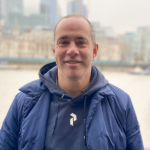
My experiences led me to create Hope Beyond Addiction.
A series of books for families and individuals affected by addiction. The first book, You Don’t Have to Take Drugs to Be Affected by Addiction, tells my personal story.
I wrote it because the people surrounding addiction can often feel invisible. Their fear, exhaustion and confusion deserve to be acknowledged.
I want families – and especially children and adults who have grown up around parental alcohol problems – to know that another person’s addiction is not their fault.
They did not cause it, and they should not have to carry responsibility for fixing it. Asking for support is a sign of strength, not betrayal.
Addiction can leave people feeling isolated, ashamed and without hope. But support, understanding and recovery can change lives – not only for the person with the addiction, but also for those around them.
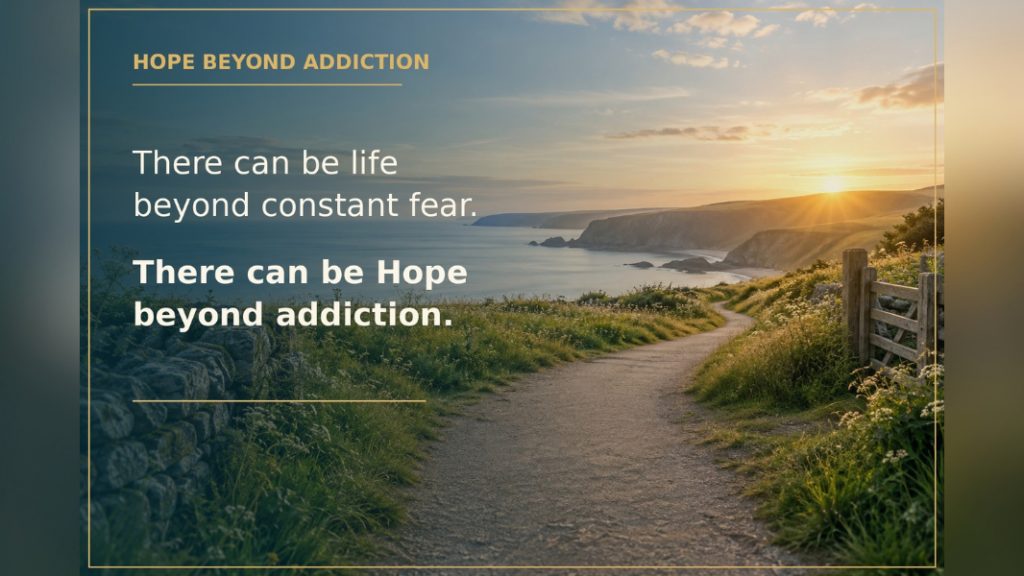
There can be life beyond constant fear. There can be peace without denial. There can be love with boundaries. There can be hope beyond addiction.