Growing up with a parent who drinks: Three volunteers share their experiences

From a discussion held as part of the HMPPS ThinkChild campaign.

Growing up with a parent who drinks: Three volunteers share their experiences

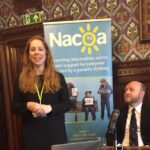
We were recently invited to present a session on the effects of parental alcohol use on children as part of the ThinkChild campaign run by His Majesty’s Prison and Probation Service (HMPPS).

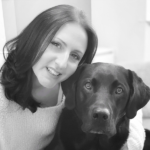
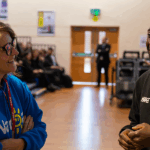
Three Nacoa Volunteers – Bonny, Shay and Lauren – kindly gave their time to share their own experiences of what it was like to grow up in a household with a parent struggling with their drinking.

The discussion showed the variety of ways in which children can experience this issue at home, how it can affect the way they present to the world outside and what they would want professionals coming into contact with affected families to know.

Below is an edited version of the conversation, organised around the questions asked during the event. 

How did you first get involved with Nacoa?


Bonny

I first got involved with Nacoa at the beginning of this year and I’ve since volunteered at the Bristol Recovery Festival. This is my second volunteering opportunity with Nacoa.

I decided to get involved to hopefully get something positive out of a negative circumstance.

I grew up in an alcoholic home. My mother was the “main” alcoholic in the family. She was the most disruptive is probably the best way to put it and she left the home when I was four.

However, my dad was also probably a functioning alcoholic. He would go to work, but then he would come home and drink quite heavily most nights.

Shay

I grew up in an alcoholic home too. My mum was an alcoholic for around five to six years before we were removed from her care and put into the care of my grandparents.

I didn’t really feel there was much support at that time, so after researching this I came across Nacoa. As soon as I saw there was a volunteer training course, I was like, yes, finally!

I can be in a space of not like-minded people, but people that had experienced similar to me.

Because up until January, I had met and had a conversation with only one person that had had the same experiences. So that was my driving force.

Lauren

I grew up with an alcoholic dad. I lived in the same house as him until I was 16 years old.

He was a binge drinker. He wasn’t drunk every day, but he was drunk a lot of days. He was quite abusive psychologically and emotionally.

It was very unpredictable and quite a scary environment up until we left when I was a teenager.

I think I had been aware of Nacoa from around my early 20s, but I was sort of just lurking on the website and the social media for about 10 years. I finally worked up the courage to get involved earlier this year.

I did the volunteer training and this is actually my first volunteering experience with Nacoa, but I’ve got three more coming up over the next week, which I’m looking forward to.

It’s really lovely to be able to get the word out because I wish I’d known about Nacoa when I was younger.

If we can make sure we reach as many young people and children as possible to let them know about the services we offer, that would be an amazing outcome for me.

My mum was an alcoholic for around five to six years before we were removed from her care and put into the care of my grandparents.

Shay, Nacoa volunteer

How do you feel growing up in an alcoholic home has affected you?


Bonny

I suppose the one word to describe it would just be instability and it’s most prevalent to me when I’m around people who’ve had normality in their childhood.

That can be different for everyone, but if you have that sense of stability as a child, you know when you don’t have that as well.

My mother could have six months of drinking and then three months where she was really good and vice versa, whether it was three months or another amount.

As a child who continued to depend on her despite her leaving, that instability was quite prevalent. If she was taking me to school, I’d have to wait to make sure she could get there, get to our house and she would be sober or whether she was coming.

There was a time when we were meant to go on holiday and my dad said, ‘No, you can’t go’ because she’d been drinking.

So you’re never really too sure what’s going to happen next. This lack of stability continued throughout my childhood into adulthood.

I continued to have a relationship with my mother, but there was still that instability around her in terms of how she’s going to show up that day. Whether we’re going to have the mum that we know and love, or whether we’re going to have someone quite different.

I suppose this probably is manifested a little bit in terms of how I act on a day-to-day basis. Any time of uncertainty in my life can kind of trigger a response including anxious and depressive thoughts.

Even now as I’m finishing uni and I’m going to move out into a different place, I’m realising that that lack of stability continues because I can’t just go home.

I have to find temporary accommodation whilst I get another place, so that lack of stability continues into adulthood.

Shay

I think I became very alert to other people’s emotions.

To me, getting through the day was trying to anticipate what was ahead based upon my mum’s mood. So I found myself doing that in all types of areas, which meant naturally I became a bit of a negative mindset person.

I was then told a lot to look on the bright side of things and “things ain’t that bad” because I’m now in my nan and granddad’s care.

But it was the complete opposite for me. And I think in the later years, it really affected my trust as well, because I felt like I had to earn people’s kindness and people’s love. I became a bit of a people pleaser as well. I’d say they were the main effects.

Lauren

It had a huge impact on me sort of all throughout my life. My mental health, my relationships, how I deal with problems and conflict as well.

As Shay said, when you’re living with an alcoholic, you’re always braced for the next thing. You become very hypervigilant and aware of anything tone of voice to body language, anything that suggests how bad is it going to be today.

And even after you leave that situation, you don’t stop bracing. You continue with that hypervigilance and that kind of attitude of ‘What’s the danger for me?’

For me that manifested as anxiety and panic disorder, because you’ve been raised with that kind of alarm system in your head being very finely tuned to potential disaster. So that doesn’t leave you.

The other thing for me is the feeling of hyper responsibility. I think in a lot of alcoholic homes, it’s very secret, it’s very contained.

When you don’t feel that you can go and talk to anyone about what’s happening, you are the person who is responsible for making everything better, smoothing things over.

And again, that’s something that stays with you.

I’m known as the sort of person who is always trying to fix everything because that’s how I was brought up, with this attitude of ‘If I don’t fix them, if I don’t fix everything, if I don’t find a way to make this better, nobody’s coming to save you.’

I think all of these behaviours that you learn as a child, they continue and endure into adulthood and they can manifest in all kinds of different ways.

I continued to have a relationship with my mother, but there was still that instability around her in terms of how she’s going to show up that day.

Bonny, Nacoa volunteer
What kind of support did you receive at the time?


Shay

Not much. I went to school one day and there were two social workers there. I got put in a room and was told not to leave until my nan came.

And when my nan came, it was, ‘You’re coming home with me’ and that was pretty much it. About four months later, they sent a counsellor in to speak to me and they said that I was okay.

Then when I went into secondary school, they sent another counsellor and at that point, I didn’t want to speak.

So they went back and said, “She’s not going to take it in, it’s not going to have any benefit to her, but in her later years, she will probably have a bit of an emotional breakdown because of it.”

And that was kind of where my support stopped.

My little brother had ADHD, so I felt like a lot of the resources went to him and there were lots of organisations and support for him. But it was almost like, unless I completely rebelled, there wasn’t any for me.

I feel like if they knew it was mandatory that we were going to be taken the way, it could have been done differently. That scene happened when I was 10 and I’m nearly 30 now and I still replay it.

I feel like they could have found gentle ways to introduce the idea that things may be changing. I wasn’t supported at all.

Bonny

I’d say it’s a mixed bag. I was 4, so I was around teachers all the time. Because I was so silent at home and we weren’t talking about it, I’d go into school and I’d just blab to everyone that would listen, to be honest.

But that was quite fortunate I suppose because I was sort of shouting for help and therefore I kind of got it sometimes, but sometimes I didn’t.

Some teachers would just sit and talk to me during break time and I also had teachers who would confront me about my low attendance because I tended not to come in on Mondays. I don’t know why. I just had this anxiety as a child of going to school on a Monday.

It was quite an obvious pattern, but I remember one teacher really confronting me in front of the class and being like, “You need to get your attendance up.” But she would have known what was going on at home.

Other than that, I’d also had interactions with the police in terms of my mum. We were on our way to a swimming lesson and she was taking me and she wasn’t well.

She was drunk and she kind of fell over and passed out in the field on the way to the swimming pool.

A woman called the police and they came and they were really good and looked after me. I think they made what could have been an awful and horrific experience a bit more positive because they just sat with me.

Even in my earliest memories, I can think of professionals most of the time and that interaction and maybe that’s due to lack of authority in my life. Who knows?

Lauren

For most of my childhood, I wasn’t receiving any support because it was something that was kept quite secret.

It wasn’t something that anyone knew about. And I both became quite deft at disguising what was going on at home while also kind of being desperate for somebody to notice.

The first time there was any kind of external contact was when I was 16. My parents relationship was breaking down, things had gotten really bad and my mental health was bad enough that it wasn’t able to be ignored anymore.

At that point, my mum and I actually went to a teacher at my school to make a disclosure because it was pretty obvious that something was going to have to be done. And it was kind of a mixed experience.

The first teacher that we spoke to was absolutely brilliant and tried to put a lot of stuff in place to support me.

But there were other members of staff whose response maybe was not as considered or as empathetic. And ultimately, I ended up leaving school halfway through year 11 and didn’t finish secondary school.

I think if there had been a bit more understanding and support from the people at school, maybe that would have been different.

That was my only real experience of working with professionals and I went to see a counsellor or a therapist when I was 16 as well in the NHS.

That was probably the first time I’d spoken to somebody outside of the family about what was happening.

What support would have been useful to you?


Lauren

I think you kind of touched on this a little bit before, talking about how it can present so differently in different children.

What’s going on at home can be acting out or withdrawing, but it can also be overachieving and being kind of hyper responsible and very mature.

So it can be really hard to spot because obviously some children are just getting straight As because they’re very good at school.

They’re not necessarily experiencing something at home, but I was definitely one of those children who tried to mask what was happening by being like, ‘Look over here, everything’s fine. I’m doing really well.’

I had always wanted somebody to notice. And then I think once it was all out there, maybe it wasn’t believed because I’d always been doing fairly well and seen as somebody who was doing okay.

I think it’s really, really important not to mistake coping mechanisms for coping, because children of alcoholics get very, very, very good at presenting this front to the world, often of ‘Don’t look behind the curtain, everything’s fine. I’m all fine.’

Even now, if I’m not doing well, people say, “How are you doing?” and I’ll say “Oh, yeah, I’m fine.” Because I’ve become trained to make it make out that everything’s okay.

If professionals are working with children and young people who have a parent with alcohol or substance misuse issues, I’d encourage them not to assume that because a child appears fine on the surface, everything is okay.

That outward presentation doesn’t necessarily reflect what they’re feeling internally. It’s always worth giving it a little extra consideration.

Bonny

I guess I’m always surprised by the lack of contact I had with my GP as a child.

I suppose that’s also a state issue as well in terms of funding, but that would probably have been someone who could have helped me more at an earlier stage and would have impacted my future development.

I’m also surprised by the fact my dad didn’t take me to the GP to until my teacher would say to him ‘She’s not well.’

There could have been a bit more interaction there if they knew a bit more about my parents’ history, which would have helped.

Shay

I would have found it beneficial if people actually told me what was happening, because at home I had two sides.

I had one half of the family who believed it was an illness, and then I had another half of the family that believed it was a choice.

So that put me in the middle in terms of resentment because to me, ‘Mum, if you love me, you should stop drinking because they’re saying it’s a choice.’

And then the other side was like she can’t control it. She has deeper things she’s dealing with. So I think at no point until I was about 17 did people actually address it with me. And that’s a long 10 years of what was happening behind closed doors.

I think regular check-ins as opposed to just asking if I’m okay would have been helpful. Maybe dig deeper with some of your questions, because a lot of the time something didn’t actually happen that day, but I felt like I was never getting over the previous day and the previous week, so it would just pile up.

It didn’t really have a good outcome by the time I got to secondary school because I just wanted to be treated like everybody else.

But people had me in this perimeter where we’re not going to punish her because she’s going through things. But equally, we can’t tell the other students she’s going through things.

So then the other students wouldn’t be very nice to me because they thought the teachers favoured me.

I just think the communication around the whole thing could have been a lot smoother if I knew what was actually happening, as opposed to thinking it was a full on choice that meant I basically wasn’t good enough for my mum to be the active mum like my friends had.

My mum chose to drink at the beginning. We have nothing to do with it, but I feel like we have a longer recovery than the alcoholic unless it results in death because my mum is a recovered alcoholic now.

So she has been clean for 12 years. So for her, it’s like healing, everybody’s happy. Whereas for me, I feel like it’s only now I’m getting into the nitty gritty of the effects.

And it’s not too late, but I still have to go to work and do life. And my job’s not going to listen to the fact that my mum was an alcoholic when I was 10 and I’m having a bad day.

I don’t think enough attention is on the affected people when it comes to alcoholism, only the alcoholics.

It’s really, really important not to mistake coping mechanisms for coping, because children of alcoholics get very, very, very good at presenting this front to the world.

Lauren, Nacoa volunteer

What’s one thing you’d most want professionals to understand about the life of a child in this situation?


Bonny

I guess it’s that children know they’re in a dysfunctional situation. You don’t have to spell it out for them. They really do know it. And so just giving them a positive experience, as positive as it can be, and not shaming them is probably the best thing.

Shay

I would say just be mindful that we’re good at hiding things. Keep asking questions in different ways, because eventually we will slip up without knowing that we’re about to slip up.

And when you get that information, immediately try and implement things. Because even if someone handed me a leaflet and said, ‘Have a look at this’ and I couldn’t comprehend the words, the fact that there’s a leaflet allows me to know that I’m not the only one that is happening to.

That would be a great thing. Just whatever literature, whatever videos you can point them in the direction of, please do.

Lauren

I think everything that Bonnie and the Shay have said as well is brilliant. But I think maybe validating the feelings that they’re having as well.

I think the most important thing a professional ever said to me was when I saw my first counsellor when I was 16. I said, ‘I don’t feel like I have a right to be upset because no one’s ever hit me. And so it’s not that bad. Other people have got it so much worse.’

And I remember her saying to me so clearly, ‘You have an absolute right to feel dreadful about what’s happened to you. You have experienced abuse. It is really hard what’s happened.’

Nobody had ever said that to me before, and that was life-changing that moment. Just to have somebody say what happened to you was awful – just hearing that alone can be so powerful.

Leave a Reply

Growing up with a parent who drinks: Three volunteers share their experiences

From a discussion held as part of the HMPPS ThinkChild campaign.

Growing up with a parent who drinks: Three volunteers share their experiences

From a discussion held as part of the HMPPS ThinkChild campaign.

Growing up with a parent who drinks: Three volunteers share their experiences

We were recently invited to present a session on the effects of parental alcohol use on children as part of the ThinkChild campaign run by His Majesty’s Prison and Probation Service (HMPPS).

Three Nacoa Volunteers – Bonny, Shay and Lauren – kindly gave their time to share their own experiences of what it was like to grow up in a household with a parent struggling with their drinking.

The discussion showed the variety of ways in which children can experience this issue at home, how it can affect the way they present to the world outside and what they would want professionals coming into contact with affected families to know.

Below is an edited version of the conversation, organised around the questions asked during the event. 

How did you first get involved with Nacoa?


Bonny

I first got involved with Nacoa at the beginning of this year and I’ve since volunteered at the Bristol Recovery Festival. This is my second volunteering opportunity with Nacoa.

I decided to get involved to hopefully get something positive out of a negative circumstance.

I grew up in an alcoholic home. My mother was the “main” alcoholic in the family. She was the most disruptive is probably the best way to put it and she left the home when I was four.

However, my dad was also probably a functioning alcoholic. He would go to work, but then he would come home and drink quite heavily most nights.

Shay

I grew up in an alcoholic home too. My mum was an alcoholic for around five to six years before we were removed from her care and put into the care of my grandparents.

I didn’t really feel there was much support at that time, so after researching this I came across Nacoa. As soon as I saw there was a volunteer training course, I was like, yes, finally!

I can be in a space of not like-minded people, but people that had experienced similar to me.

Because up until January, I had met and had a conversation with only one person that had had the same experiences. So that was my driving force.

Lauren

I grew up with an alcoholic dad. I lived in the same house as him until I was 16 years old.

He was a binge drinker. He wasn’t drunk every day, but he was drunk a lot of days. He was quite abusive psychologically and emotionally.

It was very unpredictable and quite a scary environment up until we left when I was a teenager.

I think I had been aware of Nacoa from around my early 20s, but I was sort of just lurking on the website and the social media for about 10 years. I finally worked up the courage to get involved earlier this year.

I did the volunteer training and this is actually my first volunteering experience with Nacoa, but I’ve got three more coming up over the next week, which I’m looking forward to.

It’s really lovely to be able to get the word out because I wish I’d known about Nacoa when I was younger.

If we can make sure we reach as many young people and children as possible to let them know about the services we offer, that would be an amazing outcome for me.

My mum was an alcoholic for around five to six years before we were removed from her care and put into the care of my grandparents.

Shay, Nacoa volunteer

How do you feel growing up in an alcoholic home has affected you?


Bonny

I suppose the one word to describe it would just be instability and it’s most prevalent to me when I’m around people who’ve had normality in their childhood.

That can be different for everyone, but if you have that sense of stability as a child, you know when you don’t have that as well.

My mother could have six months of drinking and then three months where she was really good and vice versa, whether it was three months or another amount.

As a child who continued to depend on her despite her leaving, that instability was quite prevalent. If she was taking me to school, I’d have to wait to make sure she could get there, get to our house and she would be sober or whether she was coming.

There was a time when we were meant to go on holiday and my dad said, ‘No, you can’t go’ because she’d been drinking.

So you’re never really too sure what’s going to happen next. This lack of stability continued throughout my childhood into adulthood.

I continued to have a relationship with my mother, but there was still that instability around her in terms of how she’s going to show up that day. Whether we’re going to have the mum that we know and love, or whether we’re going to have someone quite different.

I suppose this probably is manifested a little bit in terms of how I act on a day-to-day basis. Any time of uncertainty in my life can kind of trigger a response including anxious and depressive thoughts.

Even now as I’m finishing uni and I’m going to move out into a different place, I’m realising that that lack of stability continues because I can’t just go home.

I have to find temporary accommodation whilst I get another place, so that lack of stability continues into adulthood.

Shay

I think I became very alert to other people’s emotions.

To me, getting through the day was trying to anticipate what was ahead based upon my mum’s mood. So I found myself doing that in all types of areas, which meant naturally I became a bit of a negative mindset person.

I was then told a lot to look on the bright side of things and “things ain’t that bad” because I’m now in my nan and granddad’s care.

But it was the complete opposite for me. And I think in the later years, it really affected my trust as well, because I felt like I had to earn people’s kindness and people’s love. I became a bit of a people pleaser as well. I’d say they were the main effects.

Lauren

It had a huge impact on me sort of all throughout my life. My mental health, my relationships, how I deal with problems and conflict as well.

As Shay said, when you’re living with an alcoholic, you’re always braced for the next thing. You become very hypervigilant and aware of anything tone of voice to body language, anything that suggests how bad is it going to be today.

And even after you leave that situation, you don’t stop bracing. You continue with that hypervigilance and that kind of attitude of ‘What’s the danger for me?’

For me that manifested as anxiety and panic disorder, because you’ve been raised with that kind of alarm system in your head being very finely tuned to potential disaster. So that doesn’t leave you.

The other thing for me is the feeling of hyper responsibility. I think in a lot of alcoholic homes, it’s very secret, it’s very contained.

When you don’t feel that you can go and talk to anyone about what’s happening, you are the person who is responsible for making everything better, smoothing things over.

And again, that’s something that stays with you.

I’m known as the sort of person who is always trying to fix everything because that’s how I was brought up, with this attitude of ‘If I don’t fix them, if I don’t fix everything, if I don’t find a way to make this better, nobody’s coming to save you.’

I think all of these behaviours that you learn as a child, they continue and endure into adulthood and they can manifest in all kinds of different ways.

I continued to have a relationship with my mother, but there was still that instability around her in terms of how she’s going to show up that day.

Bonny, Nacoa volunteer

What kind of support did you receive at the time?


Shay

Not much. I went to school one day and there were two social workers there. I got put in a room and was told not to leave until my nan came.

And when my nan came, it was, ‘You’re coming home with me’ and that was pretty much it. About four months later, they sent a counsellor in to speak to me and they said that I was okay.

Then when I went into secondary school, they sent another counsellor and at that point, I didn’t want to speak.

So they went back and said, “She’s not going to take it in, it’s not going to have any benefit to her, but in her later years, she will probably have a bit of an emotional breakdown because of it.”

And that was kind of where my support stopped.

My little brother had ADHD, so I felt like a lot of the resources went to him and there were lots of organisations and support for him. But it was almost like, unless I completely rebelled, there wasn’t any for me.

I feel like if they knew it was mandatory that we were going to be taken the way, it could have been done differently. That scene happened when I was 10 and I’m nearly 30 now and I still replay it.

I feel like they could have found gentle ways to introduce the idea that things may be changing. I wasn’t supported at all.

Bonny

I’d say it’s a mixed bag. I was 4, so I was around teachers all the time. Because I was so silent at home and we weren’t talking about it, I’d go into school and I’d just blab to everyone that would listen, to be honest.

But that was quite fortunate I suppose because I was sort of shouting for help and therefore I kind of got it sometimes, but sometimes I didn’t.

Some teachers would just sit and talk to me during break time and I also had teachers who would confront me about my low attendance because I tended not to come in on Mondays. I don’t know why. I just had this anxiety as a child of going to school on a Monday.

It was quite an obvious pattern, but I remember one teacher really confronting me in front of the class and being like, “You need to get your attendance up.” But she would have known what was going on at home.

Other than that, I’d also had interactions with the police in terms of my mum. We were on our way to a swimming lesson and she was taking me and she wasn’t well.

She was drunk and she kind of fell over and passed out in the field on the way to the swimming pool.

A woman called the police and they came and they were really good and looked after me. I think they made what could have been an awful and horrific experience a bit more positive because they just sat with me.

Even in my earliest memories, I can think of professionals most of the time and that interaction and maybe that’s due to lack of authority in my life. Who knows?

Lauren

For most of my childhood, I wasn’t receiving any support because it was something that was kept quite secret.

It wasn’t something that anyone knew about. And I both became quite deft at disguising what was going on at home while also kind of being desperate for somebody to notice.

The first time there was any kind of external contact was when I was 16. My parents relationship was breaking down, things had gotten really bad and my mental health was bad enough that it wasn’t able to be ignored anymore.

At that point, my mum and I actually went to a teacher at my school to make a disclosure because it was pretty obvious that something was going to have to be done. And it was kind of a mixed experience.

The first teacher that we spoke to was absolutely brilliant and tried to put a lot of stuff in place to support me.

But there were other members of staff whose response maybe was not as considered or as empathetic. And ultimately, I ended up leaving school halfway through year 11 and didn’t finish secondary school.

I think if there had been a bit more understanding and support from the people at school, maybe that would have been different.

That was my only real experience of working with professionals and I went to see a counsellor or a therapist when I was 16 as well in the NHS.

That was probably the first time I’d spoken to somebody outside of the family about what was happening.

What support would have been useful to you?


Lauren

I think you kind of touched on this a little bit before, talking about how it can present so differently in different children.

What’s going on at home can be acting out or withdrawing, but it can also be overachieving and being kind of hyper responsible and very mature.

So it can be really hard to spot because obviously some children are just getting straight As because they’re very good at school.

They’re not necessarily experiencing something at home, but I was definitely one of those children who tried to mask what was happening by being like, ‘Look over here, everything’s fine. I’m doing really well.’

I had always wanted somebody to notice. And then I think once it was all out there, maybe it wasn’t believed because I’d always been doing fairly well and seen as somebody who was doing okay.

I think it’s really, really important not to mistake coping mechanisms for coping, because children of alcoholics get very, very, very good at presenting this front to the world, often of ‘Don’t look behind the curtain, everything’s fine. I’m all fine.’

Even now, if I’m not doing well, people say, “How are you doing?” and I’ll say “Oh, yeah, I’m fine.” Because I’ve become trained to make it make out that everything’s okay.

If professionals are working with children and young people who have a parent with alcohol or substance misuse issues, I’d encourage them not to assume that because a child appears fine on the surface, everything is okay.

That outward presentation doesn’t necessarily reflect what they’re feeling internally. It’s always worth giving it a little extra consideration.

Bonny

I guess I’m always surprised by the lack of contact I had with my GP as a child.

I suppose that’s also a state issue as well in terms of funding, but that would probably have been someone who could have helped me more at an earlier stage and would have impacted my future development.

I’m also surprised by the fact my dad didn’t take me to the GP to until my teacher would say to him ‘She’s not well.’

There could have been a bit more interaction there if they knew a bit more about my parents’ history, which would have helped.

Shay

I would have found it beneficial if people actually told me what was happening, because at home I had two sides.

I had one half of the family who believed it was an illness, and then I had another half of the family that believed it was a choice.

So that put me in the middle in terms of resentment because to me, ‘Mum, if you love me, you should stop drinking because they’re saying it’s a choice.’

And then the other side was like she can’t control it. She has deeper things she’s dealing with. So I think at no point until I was about 17 did people actually address it with me. And that’s a long 10 years of what was happening behind closed doors.

I think regular check-ins as opposed to just asking if I’m okay would have been helpful. Maybe dig deeper with some of your questions, because a lot of the time something didn’t actually happen that day, but I felt like I was never getting over the previous day and the previous week, so it would just pile up.

It didn’t really have a good outcome by the time I got to secondary school because I just wanted to be treated like everybody else.

But people had me in this perimeter where we’re not going to punish her because she’s going through things. But equally, we can’t tell the other students she’s going through things.

So then the other students wouldn’t be very nice to me because they thought the teachers favoured me.

I just think the communication around the whole thing could have been a lot smoother if I knew what was actually happening, as opposed to thinking it was a full on choice that meant I basically wasn’t good enough for my mum to be the active mum like my friends had.

My mum chose to drink at the beginning. We have nothing to do with it, but I feel like we have a longer recovery than the alcoholic unless it results in death because my mum is a recovered alcoholic now.

So she has been clean for 12 years. So for her, it’s like healing, everybody’s happy. Whereas for me, I feel like it’s only now I’m getting into the nitty gritty of the effects.

And it’s not too late, but I still have to go to work and do life. And my job’s not going to listen to the fact that my mum was an alcoholic when I was 10 and I’m having a bad day.

I don’t think enough attention is on the affected people when it comes to alcoholism, only the alcoholics.

It’s really, really important not to mistake coping mechanisms for coping, because children of alcoholics get very, very, very good at presenting this front to the world.

Lauren, Nacoa volunteer

What’s one thing you’d most want professionals to understand about the life of a child in this situation?


Bonny

I guess it’s that children know they’re in a dysfunctional situation. You don’t have to spell it out for them. They really do know it. And so just giving them a positive experience, as positive as it can be, and not shaming them is probably the best thing.

Shay

I would say just be mindful that we’re good at hiding things. Keep asking questions in different ways, because eventually we will slip up without knowing that we’re about to slip up.

And when you get that information, immediately try and implement things. Because even if someone handed me a leaflet and said, ‘Have a look at this’ and I couldn’t comprehend the words, the fact that there’s a leaflet allows me to know that I’m not the only one that is happening to.

That would be a great thing. Just whatever literature, whatever videos you can point them in the direction of, please do.

Lauren

I think everything that Bonnie and the Shay have said as well is brilliant. But I think maybe validating the feelings that they’re having as well.

I think the most important thing a professional ever said to me was when I saw my first counsellor when I was 16. I said, ‘I don’t feel like I have a right to be upset because no one’s ever hit me. And so it’s not that bad. Other people have got it so much worse.’

And I remember her saying to me so clearly, ‘You have an absolute right to feel dreadful about what’s happened to you. You have experienced abuse. It is really hard what’s happened.’


Nobody had ever said that to me before, and that was life-changing that moment. Just to have somebody say what happened to you was awful – just hearing that alone can be so powerful.

You are not alone

Remember the Six "C"s

I didn’t cause it
I can’t control it
I can’t cure it
I can take care of myself
I can communicate my feelings
I can make healthy choices

Resources you may like

Keep in touch

To find out more about our events and activities, subscribe to our mailing list

We use Mailchimp as our marketing platform. By subscribing, you acknowledge that your information will be transferred to Mailchimp for processing. Learn more about Mailchimp’s privacy practices.